
Loving Life on the Rock
Every time I drive down this road, a smile creeps onto my face that's impossible to fight back. When you look out, you can’t miss the rock of Gibraltar, a small but imposing mountain that rises out of the landscape carpeted in a lush layer of trees. I’ve been told that you used to be able to find goats and all sorts of wildlife on the upper rock, but now we’re just left with the monkeys who pose for pictures with tourists before cunningly stealing food from their knapsacks. Surrounding the rock is a concrete jungle of buildings, and you’ll find a tall and futuristic-looking apartment building dwarfing an industrial warehouse. In front of everything lies the marina filled with little boats that reflect the sun and a few tall and mighty yachts sticking out.
Slam, I managed to close the front door with my foot as I let out a sigh and dropped my backpack that was digging into my shoulder while still holding my 23-kilo bright yellow suitcase.
Just this morning, I was whizzing down the tarmac, strapped into a rock-solid seat that's seemingly engineered to be as uncomfortable as possible (a job well done, mind you), scrolling on my phone. I laughed at the picture where I had that awkward smile because my friend suddenly took out his phone in that restaurant, or at the moment we finally completed that grueling 2-hour hike under the unforgiving summer heat in Israel. That night, I fell fast asleep like a log, as if I hadn’t slept a wink for the past nine months.
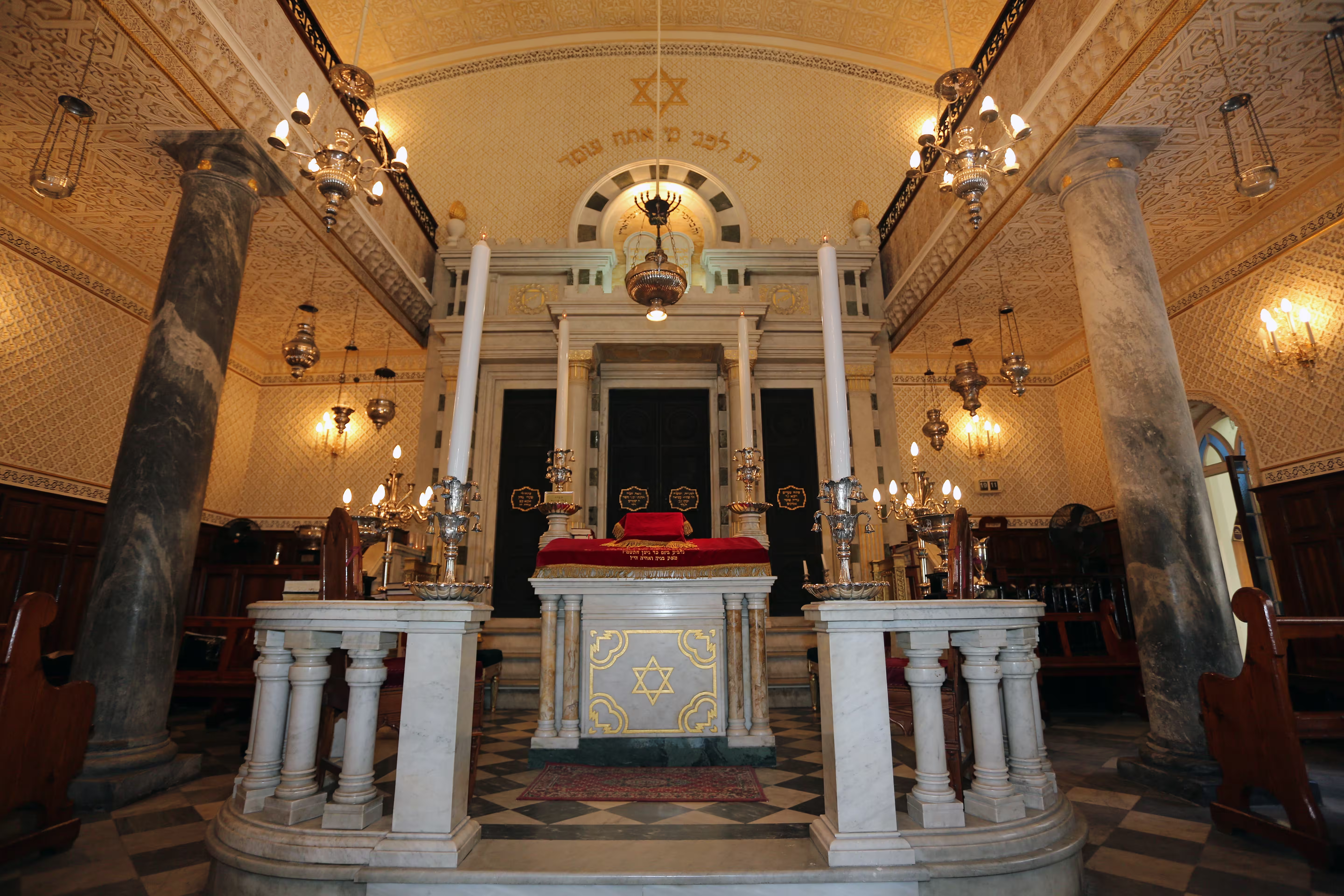
The next morning, I finally built up the courage to peel myself out of bed after my alarm went off for the third time. My eyes were still basically superglued shut, but I had to get to synagogue, so I yawned and slowly crept out of bed as my muscles groaned and ached. As I approached my synagogue, I saw that nothing had changed. The wall was still covered in that ugly yellow color, with smooth bumps caked with dust. I entered the patio through the unassuming entrance to the side room, where you could barely move, dominated by a 300-year-old table built like a tank. The two bookshelves formed a rough gradient, with new prayer books at the top, growing older as you went down. The new ones were colored in a tacky, shiny blue plastic cover with a golden-yellow, old-style font.
The minute I walked in, my skin felt one hundred eye balls point in my direction. You would think someone like Winston Churchill or Elvis Presley walked into the room. People flashed a friendly smile, and there were firm handshakes here and there, with people asking how I had been and saying they were pleased to see me. I had suddenly become a politician, answering the same questions again and again. A “It’s so nice to see you!” - “Thank you, I had an amazing time,” or “Are you happy you went?” - “Yes, I’m really happy that I decided to go to Israel”. But like every politician, I had that campaign killer. One that would cause my stomach to drop every time I had to answer. One where I had to force a smile on my face even though I think the other person could tell I was faking it. One where my throat would dry up and I would have to swallow before I could blurt out an answer.
“What’s next?” - “I don’t know.”
I dare not think what my neighbors would’ve thought if they could see me through my bedroom window, pacing back and forth while talking to myself. “Ok, so we could go to the University of Birmingham,” I remarked, “I’ve got a place, there’ll be good dorms, I could be out of this place by September, tuition would be fine, what’s there not to miss? …Yeshiva University.” I paused as my voice was already sounding unsure. “I mean, who wouldn’t want to study in New York! I’d be in a safe Jewish environment, and I think I’d really enjoy it.”
“But,” here comes the bad bit, “I have no clue how finances are going to work, I need to get a visa, not to mention I haven’t even applied yet!” It’s fair to say things weren’t looking too great. What happened next is a bit of a blur, but a few days later, in what was probably one of the most stressful moments of my life, I sat down in front of my laptop and nervously typed out “Withdrawal from the University of Birmingham…”
My heart was racing, and my breathing had sped up. My eyes darted all over the screen, scanning left to right to left, probably at least ten times, as I proofread the email again and again. This was it; once I pressed send, there was no going back. The stakes were enormous; What if YU didn’t work out? It’s not like I could write a second email titled “Please take me back!” What would I do for the rest of my year, G-d help me if I were stuck here for any longer than I had to be. My hand was going to shake itself off as my finger moved closer and closer to the enter key.
Click.

That evening, I was staring at a patch of the wall in my synagogue that was lit by the sun's rays. My breathing was more controlled, but my heart rate had only dropped slightly, still at an uneasy pace from my earlier decision. The wall was covered in a white, tessellating, oddly shaped leaf pattern with an intricate design inside. My eyes were fixated on a small crack that had started to develop in the wall. How long has that pattern been there for? How long will I be here for?
As the weeks slowly dragged by, I found myself sitting at my desk in my room, watching as friends posted pictures meeting in restaurants or moving into their dorms. I had a tall, matte-black desk covered in all sorts of unread books, brightly colored fidget toys, and other half-done projects. I would try to sit down to focus, maybe do some math because that was the most fun thing I had to do, yet after twenty minutes or so, I was back on my phone. One day, my dad suggested I get a job to keep myself occupied. At first, the idea sounded revolting. I liked being free and being able to decide what I wanted to do. If I was going to be bored and do nothing, then it would be on my own terms! I soon realized that maybe getting a job wouldn't be the worst thing in the world.
For a few summers, I worked as a software engineering intern on a small, friendly team of about 10 people at a much larger company. One Thursday afternoon, I walked into the office for a quick catch-up with my former manager, Albert. Albert regularly towers over everyone and always has a giant smile beaming across his face, almost like a lighthouse beaming comfort and warmth. Reluctantly, I admitted my dilemma and that I was going to be in Gibraltar for the next few months; I wasn’t expecting much in return. To my surprise, on Monday morning, I found myself grumpily walking into the office in a pair of badly ironed chinos and a white long-sleeve shirt. The team was still having the same conversations about what infrastructure changes were yet to be implemented, or about the bowling night run by HR that no one was planning to attend. The office was still full of whiteboards that had an even worse mess of arrows pointing at boxes and handwriting all over the place.
I get the same rush every time I fix an annoying piece of code. I’ll find myself banging my head against the wall, trying to run the same bit of code over and over until it either prints what it needs to or doesn't. Once it clicks into place, the process repeats itself until you end up with a messy web of text that somehow works. This sensation made working a treat, I was like a child in kindergarten, excited to see what shenanigans were yet to happen today.
One thing I actually didn’t enjoy about work culture was having to deal with emails. You’ll get a random email from some random list that you accidentally signed up for five years ago and just haven’t bothered to opt out of. That’s why, when I saw an email from Yeshiva University, I understandably initially thought it was just another email from the mailing list.
Then my heart stopped when I read the subject “Welcome to YU!”
January 14th, 2026, I was sitting in Synagogue checking my backpack for the hundredth time, passport, visa paperwork, food… So far, the morning had felt pretty normal; in fact, at this point, I could write a play about what would take place in a synagogue day to day. I knew like clockwork who would arrive when, like the guy who, without fail, would arrive seven minutes late every day, huffing and puffing. I almost got down a calendar of people's wardrobes, a blue shirt on Tuesday, or a yellow tie on Friday. The back benches would start to get annoyed if services were taking too long, subsequently causing the opposition to raise their voices, as it was actually too quick for their liking. I had fallen in love with the drama that I could take part in every morning.
Walking down to the airport, I had that politician feeling again; this time, I had finally completed my tenure in office, wishing farewell to my fellow citizens. I probably had more uncertainty now than before. What was New York going to be like? How was I going to make any friends? But again, I had to do what politicians do best and simply smile and wave. This time, whizzing down the runway, that grin was glued back to my face as I looked at the rock. I waved goodbye to my office, my synagogue with its kind of ugly walls, and my house. The last time my door closed, I thought that was it. This time, yellow suitcase in hand, I knew a new one was about to open.
Process Statement
Admittedly, I was quite unsure what subject to write about at first and spent a considerable amount of time brainstorming. Yet once I started thinking about describing the period when I was recently “stuck” at home and my changing attitudes toward Gibraltar, I quickly came up with some scenes that would fit into the story. For example, in the opening paragraph, my hope was to describe Gibraltar's unique landscape so the imagery would stand out throughout. I did meet with a writing tutor (Noam Narrowe) on two occasions, once quite early on in the process in order to try and finish blocking out the narrative, and once again after I had received peer review in order to prepare the narrative for its final stages.
I made an effort not to use AI at all for the personal narrative. I worried that it might influence my writing too much and wanted to keep it as organic as possible. The feedback I received from my peers was very constructive, particularly their advice to focus the imagery to develop the story. This also caused the narrative to shift away from less description and to more narration to make the timeline clearer. The title “Loving life on the Rock” is a slogan from the local radio station. I thought it suited the theme quite well and also fits well as a contradiction to the first half of the story. Overall, I really enjoyed writing this piece and landed on a writing style that I was quite happy with.